Understanding Energy Efficiency with Water Heating Systems
Understanding how energy-efficient water heating systems work is an important part of choosing the right solution for your home or commercial building. While many people compare water heaters based on price or capacity, energy efficiency plays a significant role in long-term operating costs, system performance, and environmental impact. Whether you're researching replacement options or simply want to better understand how water heater efficiency is measured, knowing how these systems are evaluated can help you make a more informed decision.
Water heating is the second-largest use of energy in a typical home after heating and cooling, and it also accounts for a significant portion of energy consumption in many commercial buildings. As a result, improving water heating efficiency can have a meaningful impact on both energy usage and operating costs. Modern energy-efficient water heating systems are designed to reduce energy consumption while providing dependable hot water, making it easier to balance performance with sustainability.
To help consumers compare water heaters, the U.S. Department of Energy measures efficiency using the Uniform Energy Factor (UEF). This standardized rating evaluates how efficiently a water heater performs over a 24-hour period using prescribed testing conditions, including hot and cold water temperatures, water usage, recovery rates, and ambient air temperature. Understanding what the UEF measures—and how it relates to real-world performance—is the first step in evaluating the overall efficiency of a water heating system.
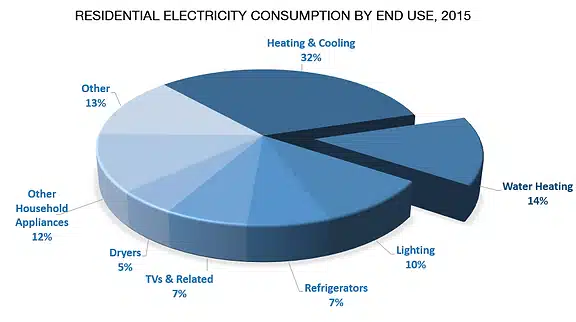
Source: U.S. Energy Information Administration, 2015 Residential Energy Consumption Survey

The higher the UEF number, the less energy the water heater uses for a given output of hot water.
- Natural gas water heaters, both storage and tankless, must have UEF values below 1 as it is impossible when burning natural gas to have 100% of the energy transfer to the water. Some of that energy is lost in the flue gas (a by-product of combustion).
- Electrical resistance water heaters, both storage and tankless, must also have UEF values below 1 as they cannot transfer more energy into the water than is supplied to the electric element. Typically, an electric water heater has a UEF very close to 1, and any deviation is due to standby losses from the hot water in the tank
Heat Pump Water Heaters (HPWH) typically have UEF values above 2.5, because a heat pump extracts heat from the air surrounding it via the refrigerant, and it can thus transfer more heat energy into the water than it consumes.

The SANCO₂ unit works to maximize the UEF value not only in the test lab, but also in real world operation due to several of its unique features:
- Inverter compressor - Inverter compressors increase the efficiency of a heat pump by varying the speed of the compressor and hence the amount of electrical energy used, depending on the ambient temperature at the heat pump (the warmer the air, the less energy is required to extract heat) and the set point and usage load. The SANCO₂ is the only residential HPWH to use an inverter compressor to move the refrigerant.
- DC fan motor & water pump - The other motors in the SANCO₂, the fan and water pump, are also powered by direct current (DC), just like the inverter compressor. This allows both to run at a speed based on load requirements to optimize energy efficiency.
These features allow the SANCO₂ to be extremely energy efficient under all ambient temperatures, resulting in a best-in-class COP (Coefficient of Performance, Power Out / Power In).
Energy-Efficient Water Heating Systems from Eco2 Water Heater
At Eco2 Water Heater, we believe that understanding water heater efficiency helps customers make more informed decisions. That's why we design energy-efficient water heating systems that combine advanced CO₂ heat pump technology with innovative engineering to deliver reliable hot water while reducing energy consumption.
Our product lineup includes residential and commercial heat pump water heating systems designed to help improve efficiency, lower operating costs, and support long-term sustainability goals. Whether you're exploring replacement options or planning a new installation, our team is here to help you better understand energy-efficient water heating systems and find a solution that best fits your needs.